How One Person’s Acts Did Change the World

Updated: Sep 20, 2025
A few days ago, I posted a blog about how Edward Kimball’s investment of his time in a young boy in his Sunday School class changed the world. Check out that post for details.
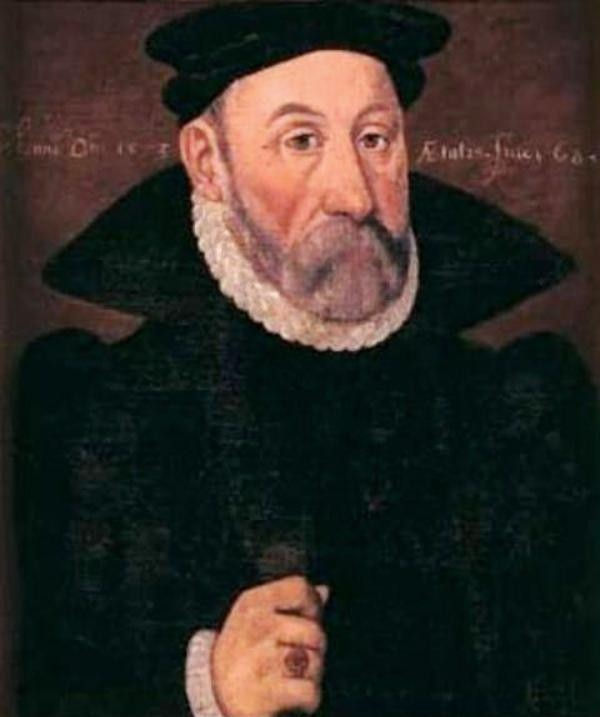
Today, I decided to delve into some family tree history with a story about another man whose acts of courage, responsibility, and loyalty did change the world. His name is Henry Bedingfield. He lived in England from 1505 – 1583. He is my second cousin, 12 times removed.
Before his story, a little of mine first. My mom is the second youngest of nine siblings. She is 94 years old and only has one remaining living sibling – her younger sister. As my mom’s older siblings were getting older and becoming feebler, she decided to sit down with each of them and capture things they remembered about their childhood, other relatives, and other life events. It became the start of a book that she unfortunately never finished.
It was, however, the nexus of how I got interested in genealogy. I took her captured information and began creating a family tree a lot of years ago. Today, I have over 15K people in my family tree. Not just great grandparents, but also information about their siblings and spouses. Along the way, I uncovered a few rogues --- William The Conqueror is my 24th Great Grandfather. However, there were some pleasant surprises and stories discovered along the way too.
That brings me to the story of Henry Bedingfield. His full story is here.
The snippet of his life that I want to bring to life today concerns the time that he was Lieutenant of the Tower of London.
After the death of Henry VIII, there were turbulent times in England with the struggle between Catholics and Protestants regarding power, the monarchy, and the Church of England. Henry Bedingfield was Catholic and a supporter of Queen Mary ---- Henry VIII’s older daughter and not a supporter of his younger daughter Princess Elizabeth. He was instrumental in helping Mary ascend onto the throne of England. He was given various responsibilities during her reign.
At one point, Henry Bedingfield was given responsibility for protecting a political prisoner ---Princess Elizabeth. There were lots of threats against her because it was believed that when Queen Mary died, then Elizabeth would push to make England Protestant again --- as it had been under Henry VIII and his only son Edward VI.
Henry Bedingfield was a man of courage, responsibility, and loyalty. Even though Henry could guess the consequences of Elizabeth surviving her protective custody and becoming Queen, he chose to protect her despite lots of pressure otherwise from competing political factions. The Tower of London had a history of competing claimants to the throne dying mysteriously under the charge of the Tower guards.
His loyalty and courage protected him in the end. When Elizabeth I became Queen, there was political retribution to the people --- and their families ---- that had helped put Mary on the throne and had been involved in the religious persecution of the Protestants.
Elizabeth chose not to take retribution on Henry --- though other siblings in his family did lose land and titles and were imprisoned. She eventually invited him back to court and fondly referred to him as her favorite “gaoler” --- the English term for Jailer.
The world would be a vastly different place if Princess Elizabeth had not survived her protective custody imprisonment in the Tower of London. Elizabeth I realized that her ascension to the throne was a direct result of Henry Bedingfield’s courage, sense of responsibility, and loyalty to her and to the English monarchy.
I ‘ve come to appreciate a poem by Linda Ellis entitled “The Dash.” It is a great poem and I would encourage you to read it sometime. But for today the first stanza is important.
“I read of a man who stood to speak at the funeral of a friend.
He referred to the dates on the tombstone from the beginning to the end.
He noted that first came the date of the birth and spoke the following date with tears.
But he said what mattered most of all was the dash between the years.”
How we invest those dash years depends on our priorities, whatever we may believe our calling in life has been, our ability to take a chance on someone or something even when circumstances deem otherwise, and how we choose to impact the lives of the people and world around us.
Legacies. We all have them. It takes time and effort to develop the kind of legacy to be celebrated ---- the dash between the end dates. We can celebrate Henry Bedingfield’s courage and legacy five hundred years after his death.
How is your legacy coming?
Comments